How Does a CDA Oven Work? A Friendly Guide for Home Cooks
Ovens are at the heart of many homes. They bake our cakes, roast our dinners, and make life in the kitchen easier. Among modern ovens, CDA ovens have become popular for their reliability, smart design, and ease of use. But if you’ve ever wondered, “How does a CDA oven actually work?”, this guide is for you.
Whether you are a beginner cook or someone looking to understand your kitchen appliance better, we will break down everything about CDA ovens—step by step, with easy examples, real-life insights, and a few stories from my own cooking adventures.
How a CDA Oven Works: Step-by-Step Guide for Home Cooks
Understanding your oven can transform your cooking. CDA ovens combine smart technology with straightforward design, making them versatile for all types of cooking.
Step 1: Heat Generation
At the core of any CDA oven are heating elements. These are metal rods or coils located at the top and bottom of the oven. When you turn on the oven, electricity flows through these elements, heating them up. Some ovens have additional fan-assisted elements that circulate hot air, giving even heat throughout the cavity.
I remember baking my first tray of cookies in a CDA oven. I left them in the middle rack, assuming the heat would reach everywhere equally. To my surprise, the bottom cookies browned faster. That’s when I learned that understanding heat placement and fan usage makes a big difference.
Step 2: Heat Distribution
Most CDA ovens use convection to spread heat evenly. Convection means a fan moves hot air around the oven cavity. This is different from conventional ovens, where heat rises naturally, which sometimes causes uneven cooking.
Think of it like a gentle wind circulating warmth in a room. Your cake, roast, or casserole gets even heat from all sides, so it cooks uniformly.
Step 3: Cooking Modes
CDA ovens offer various cooking modes, such as:
-
Bake: Standard bottom-up heat for bread, cakes, and casseroles.
-
Grill: Powerful top heat for browning meats, toasting, or finishing dishes.
-
Fan-assisted bake: Combines bottom heat with fan circulation for even cooking.
-
Defrost or Microwave (in combo models): Uses gentle heat or microwaves to thaw food quickly.
Here’s a small anecdote: once I tried the grill mode for my lasagna. The top cheese melted perfectly without burning the rest. Understanding these modes helps prevent kitchen disasters.
Maximizing Your CDA Oven: How to Use It Properly
Selecting the Right Settings
Choosing the correct mode is simple once you know the basics:
-
Cakes & bread: Middle rack, bake or fan-assisted bake.
-
Roasts & meats: Lower rack, grill or fan-assisted mode for crisp edges.
-
Reheating leftovers: Use lower temperatures or defrost modes.
Common Mistakes
Beginners often make these errors:
-
Overcrowding the oven: Blocks air circulation, causing uneven cooking.
-
Wrong rack placement: Top rack may burn the surface before the inside is cooked.
-
Ignoring preheating: CDA ovens heat quickly, but preheating ensures recipes cook correctly.
I once tried to bake two pizza trays simultaneously without adjusting settings. Half were burnt while the others were undercooked. Lesson learned: fan-assisted mode can save the day.
Inside a CDA Oven: Understanding the Technology
Heating Elements and Fans
CDA ovens often have dual heating elements. The fan pushes heat around, ensuring even cooking. The fan is quiet but powerful, preventing hot and cold spots.
Sensors and Thermostats
Modern CDA ovens have temperature sensors that regulate heat. Once the oven reaches your selected temperature, the element cycles on and off to maintain it.
Energy Efficiency
These features also make CDA ovens energy-efficient. Cooking is faster, and you save electricity by avoiding uneven cooking or repeated baking.
How Does a CDA Oven Work Compared to Other Ovens?
CDA ovens stand out because they balance simplicity and smart features.
-
Conventional ovens: Heat rises naturally, sometimes unevenly.
-
CDA fan-assisted ovens: Circulate heat evenly, perfect for baking, roasting, and multi-rack cooking.
-
Microwave combos: Some CDA models combine traditional heating with microwaves for faster cooking.
By understanding how the oven works, you can avoid buying expensive gadgets unnecessarily. CDA ovens often replace multiple appliances efficiently.
Why Your CDA Oven Might Not Cook Right
Sometimes, results aren’t perfect. Here’s why:
-
Incorrect rack placement
-
Not using the fan-assisted mode when needed
-
Overcrowded trays
-
Ignoring preheating
-
Incorrect temperature setting for the recipe
Knowing how heat circulates and how the modes function can solve most problems without calling service.
Cook Smarter: Efficiency Tips
Understanding your CDA oven can save time and energy.
-
Batch cooking: Use fan mode for cooking multiple dishes at once.
-
Energy-saving tips: Avoid opening the door repeatedly. Each opening loses heat.
-
Meal planning: Adjust modes for quicker cooking (fan-assisted for even roasts, standard bake for delicate pastries).
I once cooked a full Sunday meal—roast, vegetables, and gratin—using a CDA oven without waiting for separate preheats. The oven’s fan-assisted design made it possible.
How to Use a CDA Electric Oven?
Using your CDA electric oven is simple:
-
Plug it in and turn it on.
-
Select the cooking mode (bake, grill, fan-assisted).
-
Set the temperature.
-
Place your food in the right rack position.
-
Preheat if required.
-
Monitor cooking; some recipes need stirring or rotation.
Always check the manual for specific features. Some models include timers, quick-start programs, or eco-modes.
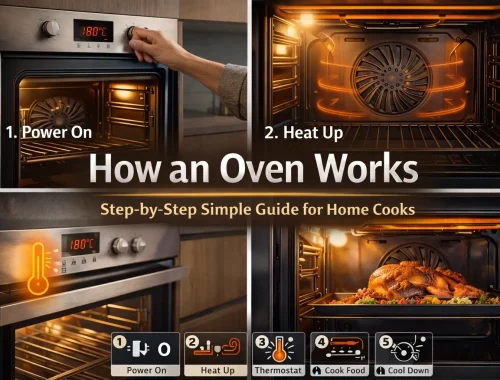
How Does an Oven Work Step by Step?
-
Power on: Electric or gas source heats elements.
-
Heating: Elements reach the set temperature.
-
Circulation: Fans distribute hot air (in CDA convection ovens).
-
Cooking: Heat penetrates food, cooking it evenly.
-
Monitoring: Sensors maintain temperature and prevent overheating.
-
Completion: Timer signals or auto-shutoff occurs.
Even complex meals like lasagna or roast chicken are cooked evenly when these steps are understood.
How Do I Turn on a CDA Microwave?
Many CDA ovens are combination units:
-
Select Microwave mode on the control panel.
-
Set the desired power level.
-
Place food inside.
-
Close the door and start cooking.
Remember: Microwave mode cooks faster but does not brown or crisp like the oven mode.
How Long Should a CDA Oven Last?
With normal use and maintenance, a CDA oven can last 10–15 years. Factors that affect lifespan:
-
Frequency of use
-
Proper cleaning of trays and racks
-
Avoiding spills on heating elements
-
Not overloading the oven
A friend of mine has been using a CDA oven for 12 years without issues, just by keeping it clean and following simple instructions.
Unique Insights About CDA Ovens
-
Even heat matters: Convection prevents undercooked centers.
-
Versatility: One appliance often replaces two or three.
-
Beginner-friendly: Straightforward controls allow even novice cooks to succeed.
-
Energy-saving: Faster cooking means less electricity used.
Personal story: I once tried cooking a delicate soufflé in a non-convection oven. It collapsed. In my CDA oven, it came out perfect. The fan circulation made all the difference.
Conclusion: Understanding Makes You a Better Cook
CDA ovens are not just appliances—they are tools to make cooking smarter and easier. Knowing how your oven works:
-
Prevents mistakes
-
Saves time and energy
-
Improves the quality of your meals
-
Makes you confident in experimenting
From baking, grilling, to reheating leftovers, CDA ovens are versatile, reliable, and efficient. And the best part? You can master them with a little understanding and practice.
So next time you preheat your CDA oven, remember: a little knowledge about how it works goes a long way. Your meals will thank you, and your cooking will feel professional—even in a home kitchen.


You May Also Like

What Are the Symbols for an Oven? A Simple Breakdown for Everyday Home Cooks

Small Changes, Big Impact: Interior Design Tips That Elevate Your Home