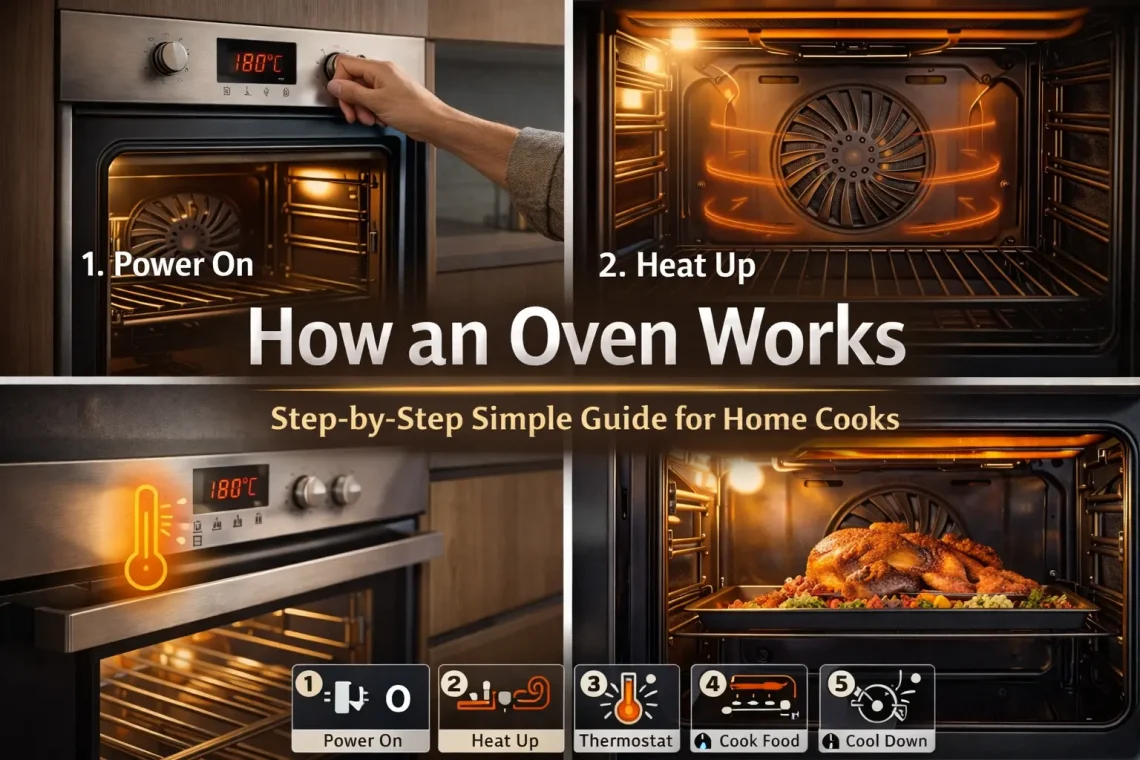
How Does an Oven Work Step by Step? A Simple Guide for Home Cooks
Ovens are one of the most important appliances in any kitchen. They bake our cakes, roast our meals, and make everyday cooking much easier. Yet, many people have wondered: how does an oven actually work? Understanding this can make cooking less stressful, improve your results, and even help you use your oven more efficiently.
This guide will break down oven operation step by step, explain the technology in plain language, and give practical tips. Whether you’re a beginner or just curious about what happens inside your oven, this article is for you.
How Does an Oven Actually Work?
At first glance, an oven seems simple: you turn it on, set a temperature, and food cooks. But inside, several systems work together to turn electricity into heat and distribute it evenly.
Ovens can be gas or electric. Gas ovens heat using a flame, while electric ovens use heating elements. Both types use thermostats to control temperature. Modern ovens also often include convection fans to circulate hot air.
Here’s a simple story: I once baked a tray of muffins without preheating. The tops browned quickly, but the centers stayed undercooked. That’s when I realized that knowing how heat flows in an oven is essential for perfect baking.
Step 1: Powering the Oven
The first step is turning on the oven. When you switch on the appliance:
-
Electricity (in electric ovens) or gas (in gas ovens) begins to flow.
-
In electric ovens, this energy powers the heating elements.
-
In gas ovens, it ignites the flame at the bottom of the oven.
At this stage, nothing cooks immediately. The oven is still cold, and the heating system begins to warm up. It’s similar to preheating a kettle before making tea—the oven must reach the right temperature to cook food evenly.
Step 2: Heating Elements Warm Up
Electric ovens have two main heating elements:
-
Bottom element: Provides heat for baking and cooking the base of dishes.
-
Top element: Often used for grilling or browning food.
In a gas oven, the heat comes from a flame at the bottom. Some ovens combine top and bottom heat for more even results.
Personal anecdote: I once tried roasting vegetables without using the top element on my oven. They were soft at the bottom but pale on top. Using both elements or fan-assisted mode solved this problem.
Step 3: Thermostat Monitors Temperature
The thermostat is like the oven’s brain. It measures the oven temperature and turns heating elements on or off to maintain the set heat.
-
If the oven is too cold, the elements turn on.
-
If it’s too hot, they turn off.
This cycling keeps the temperature steady, ensuring that your cake doesn’t burn on the edges while staying raw inside.
Fun insight: Many people don’t realize that small variations in oven temperature are normal. Even professional ovens cycle heat this way to keep things balanced.
Step 4: Convection Fan Circulates Heat (Optional)
Many modern ovens include a convection fan at the back. This fan circulates hot air around the food, distributing heat evenly.
-
Traditional baking relies on heat rising naturally, which can cause uneven cooking.
-
Convection baking reduces cooking time and produces more uniform results.
Example: I baked two trays of cookies at the same time in a convection oven. Both trays came out golden brown, thanks to even air circulation.
Step 5: Cooking Food
Once the oven reaches the set temperature:
-
Place your food inside.
-
Keep it on the correct rack (middle is usually best for even cooking).
-
Avoid opening the door too often to maintain consistent heat.
The heat penetrates food from all sides. Moisture evaporates, proteins denature, and sugars caramelize—creating that delicious aroma in your kitchen.
Pro tip: Fan-assisted mode works best for multi-rack cooking, while conventional heat is ideal for delicate baking like soufflés.
Step 6: Monitoring and Adjusting
During cooking:
-
Use timers to prevent overcooking.
-
Adjust racks or rotate trays if necessary.
-
Watch for visual cues—browning, bubbling, or rising.
Personal story: I once baked a lasagna and didn’t rotate it halfway. The back was browning faster than the front. After rotating, it cooked perfectly. Understanding your oven’s heat patterns is key.
Step 7: Turning Off the Oven
After cooking:
-
Turn the temperature dial to zero or press the stop button.
-
Allow the oven to cool naturally before cleaning.
-
Disconnect or switch off if necessary for safety.
Tip: Some ovens retain heat for a while. This residual heat can be used for warming plates or gentle reheating without switching it back on.
How to Operate an Oven Step by Step
Let’s summarize the full sequence:
-
Check the oven is plugged in or connected to gas.
-
Select the cooking mode (bake, grill, or fan-assisted).
-
Set the desired temperature.
-
Press start or turn the dial fully.
-
Wait for preheating indicator.
-
Place your food on the correct rack.
-
Monitor cooking with the door closed as much as possible.
-
Turn off the oven after use and let it cool.
What Is the Working Principle of an Oven?
The basic principle is simple: convert energy into heat and transfer it to food efficiently.
-
Electric ovens: Electrical energy → Heating elements → Heat → Food
-
Gas ovens: Combustion → Flame → Heat → Food
Thermostats and fans make sure heat is distributed evenly, creating consistent cooking results.
How Does an Electric Oven Work Step by Step?
-
Power on: Electricity flows into the heating elements.
-
Heating: Elements glow red-hot.
-
Thermostat control: Maintains set temperature by cycling the elements.
-
Convection fan (if available): Circulates air for even cooking.
-
Food cooks: Heat penetrates and transforms ingredients.
-
Completion: Timer signals or auto-shutoff occurs.
This sequence ensures that food is cooked evenly and safely.
Comparison: Oven vs Microwave vs Convection Oven
-
Standard Oven: Heat from top/bottom, slower cooking, perfect for baked goods.
-
Microwave: Uses electromagnetic waves, cooks food quickly, but doesn’t brown.
-
Convection Oven: Fan-assisted, distributes heat evenly, faster cooking, ideal for multi-rack baking.
Knowing how your oven works helps you choose the right appliance for your recipe.
Maintenance Tips for Efficient Oven Use
-
Clean spills immediately to prevent burning and odors.
-
Avoid metal utensils that can damage elements.
-
Preheat properly before baking.
-
Check seals and gaskets to maintain heat efficiency.
-
Use fan-assisted mode for faster cooking and energy savings.
Personal anecdote: A friend’s oven struggled to bake evenly until the fan was cleaned. Regular maintenance ensures longevity and efficiency.
Safety Tips While Using an Oven
-
Always use oven mitts.
-
Keep children away from the oven.
-
Don’t leave food unattended while cooking.
-
Ensure ventilation in the kitchen.
-
Turn off oven after use.
Summary: Understanding Your Oven Step by Step
An oven may seem simple, but understanding its operation can make a big difference in your cooking. By knowing how power, heating elements, thermostats, and fans work together:
-
You can bake and roast evenly.
-
You reduce mistakes like undercooked centers or burnt edges.
-
You maintain energy efficiency and extend the life of your appliance.
From turning it on to monitoring your meal, each step has a purpose. The next time you preheat your oven, remember—you’re not just cooking; you’re interacting with a carefully engineered system that transforms energy into delicious results.

Why Is My CDA Oven Not Heating Up?
You May Also Like

Downsizing for the Golden Years: How to Profit From Moving to a Smaller Home
🍳 Confused by Your Beko Oven Symbols? Here’s a Simple Guide to What They All Mean