What is the triangle symbol on the oven?
On many ovens and OTGs, a row of three small triangles at the top of a square shows that only the top heating element is on. This setting is used for grilling, toasting, or browning the top of food, like cheese on lasagne, garlic bread, or gratins.
If you see three triangles at the bottom of the square, that usually means bottom heat only, useful for crisping pizza bases, pie crusts, or tart shells without burning the top.
If there are triangles at both top and bottom, that symbol often indicates top and bottom heat together (a basic baking mode), good for cakes, cookies, and general baking where you want even heat from above and below.
Because there’s no global standard, some brands instead use triangles to hint at grill/broil functions, especially if they’re only at the top and look like “sharp heat” symbols. In those cases the triangles stand in for intense radiant heat from above.
What are the different symbols on my oven?
Even if designs differ slightly, most modern ovens use a shared “language” of icons:
-
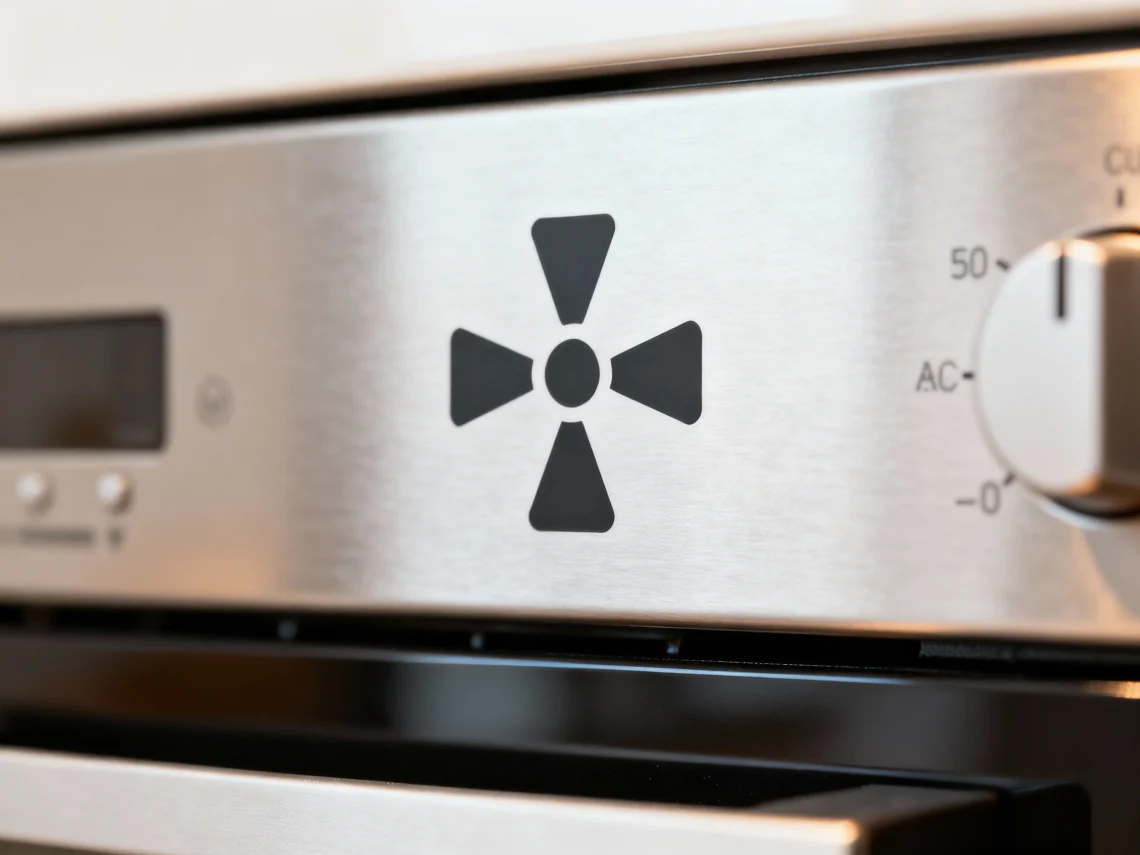
Fan oven / convection: A fan, sometimes inside a circle or made of three shapes in a triangle pattern, shows hot air is being blown around the cavity for even cooking.
-
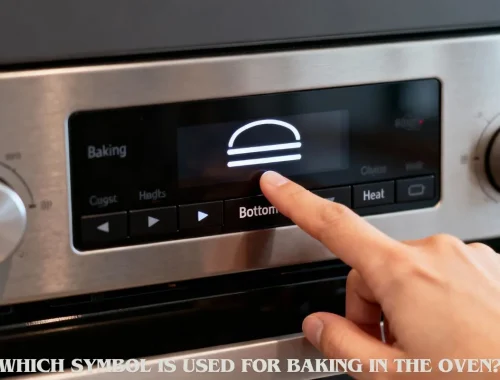
Conventional heat: A square with a line at the top and a line at the bottom = top and bottom elements on, no fan. Great for traditional baking and roasting.
-
Top heat / grill: Jagged line or triangles at the top of a square = heat from above only, for grilling or browning.
-
Bottom heat: Single line or triangles at the bottom = base heat only, ideal for crisping pizza or pies.
-
Fan + grill: Fan icon with a jagged line or top bar = grill heat distributed by a fan for more even browning.
-
Fan + bottom heat: Fan with bottom bar = more heat toward the base with air circulation, good for pizza or items that need strong underside cooking.
-
Defrost: Snowflake or droplets with a fan = fan on, no heat, just air movement to thaw food safely.
-
Light: Little bulb icon = switches the internal light on.
-
Pyrolytic cleaning: Row of dots or a special cleaning icon = self‑cleaning mode that incinerates residue at very high heat.
A personal tip: when moving into a new place, it helps to snap a photo of the control panel and jot down what each symbol does once you’ve checked the manual. It saves a lot of “mystery mode” dinners.
What are the three main parts of an oven?
Most electric ovens—whether built‑in, range, or OTG—are built around three core elements:
-
Heating elements
-
Top element for grilling/browning and top heat.
-
Bottom element for base baking and crisping.
Some models also have a rear element paired with a fan for true convection.
-
-
Fan and airflow system
-
The fan (usually at the back wall) circulates hot air in convection modes, giving more even temperatures and often faster cooking.
-
-
Controls and sensors
-
Thermostat/temperature sensor to regulate heat.
-
Control knobs or touch panel, plus indicator lights and timers.
-
Understanding these three parts helps the triangle symbols make more sense: triangles are a visual shorthand for which element is currently active, and sometimes how intense or directional that heat is.
How do I use the convection feature on my oven?
Convection (fan) modes are usually shown with a fan symbol or a shape made of three “fan blades” arranged like a triangle inside a square. This tells you the fan is pushing hot air evenly around the cavity.
To use it well:
-
Select the fan/convection symbol
Turn the function knob to the fan icon (or the three‑block triangle fan symbol), not the triangles‑only grill icon. -
Lower the temperature slightly
Because hot air moves around, food often cooks faster. Many guides suggest reducing your usual recipe temperature by about 10–20 °C and checking a bit earlier. -
Use fewer, evenly spaced trays
Convection is great for multi‑tray cookies or roasting vegetables because air can flow between trays. Try not to block the fan at the back. -
Choose the right dishes
-
Great for: roasting meat and veg, baking cookies, crisping frozen foods.
-
Less ideal (on strong fan) for: very delicate sponge cakes or soufflés that might collapse.
-
Anecdotally, many people find their roasts and sheet‑pan dinners come out far better once they switch from the basic top‑and‑bottom symbol to the fan/convection one—fewer burnt edges and undercooked centers.
Unique insights: why brands use triangles differently
-
Some OTG makers use three triangles as a stylised “heat” arrow, much like campfire flames, to show direction of heat (top, bottom, or both).
-
Other ovens mainly stick to lines and fan icons, leaving triangles for special quick‑preheat or grill variants, which can be confusing without a manual.
-
There is no universal standard, so the same three‑triangle icon can mean top heat on one appliance and a particular preheat mode on another. Checking your model’s user guide is always the safest move, especially if you see food burning on top or staying pale underneath.
If you tell the exact brand and model, a more precise interpretation is possible, but in everyday use, you can think of three triangles near the top as “strong heat from above,” near the bottom as “strong heat from below,” and both ends as “baking heat from both sides.”


You May Also Like
What Are the Symbols for an Oven? A Simple Breakdown for Everyday Home Cooks
🔥 Electric Cooker Oven Symbols Explained: What Every Icon on Your Oven Really Means